什么是内容分发网络(CDN)?| CDN 如何工作?
探索 CDN 如何快速、高效、安全地向网站和互联网服务交付内容。
学习目标
阅读本文后,您将能够:
- 定义内容交付网络 (CDN)
- 了解使用 CDN 的一些好处
- 更详细了解 CDN 的工作方式
复制文章链接
什么是 CDN?
内容分发网络 (CDN) 是一个分布在不同地理位置的服务器群,用于缓存靠近最终用户的内容。CDN 可以快速传输加载互联网内容所需的资产,包括 HTML 网页、JavaScript 文件、样式表、图像和视频。
正确配置的 CDN 还可帮助保护网站免受某些常见的恶意攻击,例如分布式拒绝服务(DDOS)攻击。
CDN 是否与 Web 主机一样?
虽然 CDN 并不托管内容,也无法替代正规的网站托管服务,但它能够在网络边缘缓存内容,从而提升网站性能。许多网站很难通过传统的托管服务满足其性能需求,因而选择使用 CDN。
CDN 利用缓存来减少托管带宽,帮助防止服务中断,以及提高安全性,因此对于传统网页托管带来的一些主要痛点,CDN 成为一种流行的选择。
使用 CDN 有什么好处?
尽管使用 CDN 的好处取决于互联网资产的大小和需求,但对于大多数用户而言,主要好处可以分为以下四个不同的部分:
- 缩短网站加载时间 – 通过将内容分发到访问者附近的 CDN 服务器(以及其他优化措施),访问者体验到更快的页面加载时间。由于访问者更倾向于离开加载缓慢的网站,CDN 可以降低跳出率并增加人们在该网站上停留的时间。换句话说,网站速度越快,用户停留的时间越长。
- 减少带宽成本 – 网站托管的带宽消耗成本是网站的主要费用。通过缓存和其他优化,CDN 能够减少源服务器必须提供的数据量,从而降低网站所有者的托管成本。
- 增加内容可用性和冗余 – 大流量或硬件故障可能会扰乱正常的网站功能。由于 CDN 具有分布式特性,因此与许多源服务器相比,CDN 可以处理更多流量并更好地承受硬件故障。
- 改善网站安全性 – CDN 可以通过提供 DDoS 缓解、安全证书的改进以及其他优化措施来提高安全性。
CDN 如何工作?
CDN 的核心是一个服务器网络,目的是尽可能快速、便宜、可靠和安全地交付内容。为了提高速度和连接性,CDN 会将服务器放置在不同网络之间的交换点。
这些互联网交换点(IXP)是不同互联网提供商连接的主要位置,以便彼此提供对来自其不同网络的流量的访问。通过连接到这些高速且高度互连的位置,CDN 提供商可以减少高速数据传输中的成本和传输时间。
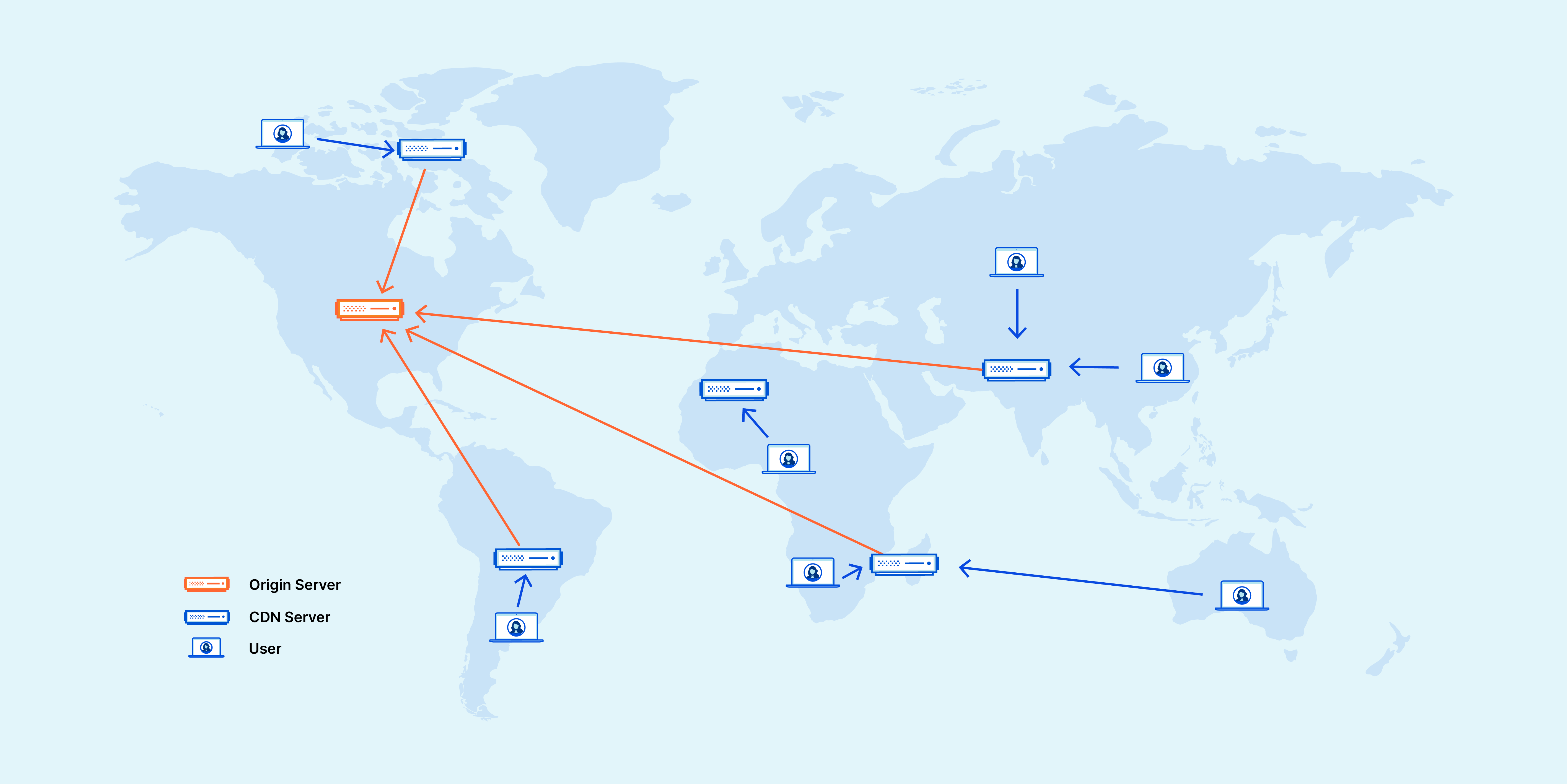
除了在 IXP 中放置服务器,CDN 还对标准客户端/服务器数据传输进行了诸多优化。 CDN 将数据中心放置在全球的战略位置,增强安全性,并设计成可承受各种类型的故障和互联网拥塞。
延迟 – CDN 如何改善网站加载时间?
在网站加载内容方面,隨着网站速度变慢,用户数量会迅速减少。 CDN 服务可以通过以下方式帮助减少加载时间:
- CDN 的全球分布性可缩短用户与网站资源之间的距离。CDN 使得用户不必连接到网站源服务器的所在地,而是连接到一个地理位置更近的数据中心。更少的传输时间意味着更快的服务。
- 硬件和软件优化,例如有效的负载均衡和固态硬盘驱动器,可以帮助数据更快地到达用户。
- CDN 可以使用最小化和文件压缩之类的策略来减小文件大小,从而减少传输的数据量。较小的文件意味着更快的加载时间。
- CDN 还可以通过优化连接重用和启用 TLS 假启动来加速使用 TLS/SSL 的站点。
可靠性和冗余 – CDN 如何使网站始终保持在线状态?
对于拥有互联网资产的任何人来说,正常运行时间都是至关重要的组成部分。恶意攻击或只是受欢迎程度增加所致的硬件故障和流量激增,都有可能使 Web 服务器停机并阻止用户访问站点或服务。完善的 CDN 具备一些可最大程度减少停机时间的功能:
- 负载均衡可在多个服务器之间平均分配网络流量,从而更容易适应流量的快速增长。
- 即使一台或多台 CDN 服务器由于硬件故障而脱机,智能故障切换也可提供不间断的服务;故障转移可以将流量重新分配给其他正常运行的服务器。
- 如果整个数据中心都遇到技术问题,那么 Anycast 路由会将流量转移到另一个可用的数据中心,以确保所有用户都能继续访问网站。
数据安全性 – CDN 如何保护数据?
信息安全是 CDN 不可或缺的一部分。CDN 可以使用新的 TLS/SSL 证书保护站点的安全,这将确保高标准的身份验证、加密和完整性。了解有关 CDN 的安全问题,并探索可以采取什么措施来安全地交付内容。了解 CDN SSL/TLS 安全性
带宽费用 – CDN如何减少带宽成本?
源服务器每次响应请求时,都会消耗带宽。了解 CDN (例如 Cloudflare CDN )如何减少对源服务器的请求并降低带宽成本。
常见问题解答
What is the primary purpose of a content delivery network (CDN)?
A CDN's purpose is to provide fast delivery of Internet content. It allows for the quick transfer of assets needed for loading web content including HTML pages, JavaScript files, stylesheets, images, and videos.
How does a CDN improve website load times?
By distributing content closer to website visitors through strategically located data centers, a CDN reduces the physical distance data must travel. This minimizes latency and ensures that users experience faster page load speeds.
In what ways can a CDN reduce bandwidth costs for a website owner?
Every time an origin server responds to a request, it consumes bandwidth. A CDN handles the majority of these requests by serving cached content from its own servers, which significantly reduces the amount of data the origin server must provide, thereby lowering hosting costs.
How does a CDN enhance a website's reliability and uptime?
Due to its distributed nature, a CDN can handle larger amounts of traffic and withstand hardware failures better than a single origin server. If one server or data center goes down, the network can automatically redistribute traffic to other available servers to keep the website online.
Can a CDN provide protection against malicious online attacks?
CDNs can improve website security by providing DDoS mitigation, managing security certificates, hosting a WAF, and other optimizations. Because it sits at the edge of the network, it can identify and block many types of malicious traffic before they reach the origin server.
What is the difference between a CDN and a traditional web host?
A web host stores your original files, while a CDN makes those files more accessible to a global audience by caching them.
How does caching work within a CDN?
Caching is the process of storing copies of files in temporary locations so they can be accessed more quickly. In a CDN, files are cached on edge servers located around the world, allowing the network to serve content to nearby users without needing to fetch it from the origin server every time.
Is a CDN only useful for large, global websites?
While global sites see the most dramatic benefits, any website with a distributed audience can benefit from a CDN. It helps ensure a consistent and fast experience for all users, regardless of their location, and provides an extra layer of security and reliability for sites of all sizes.